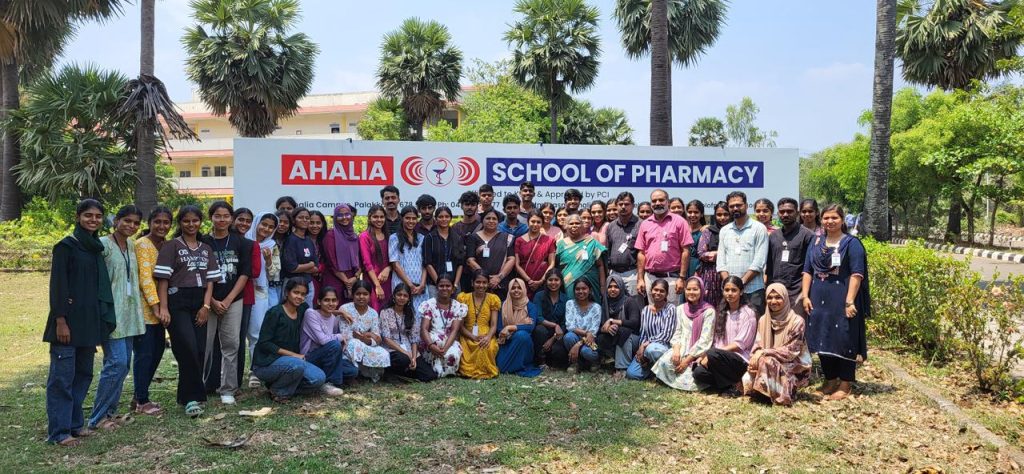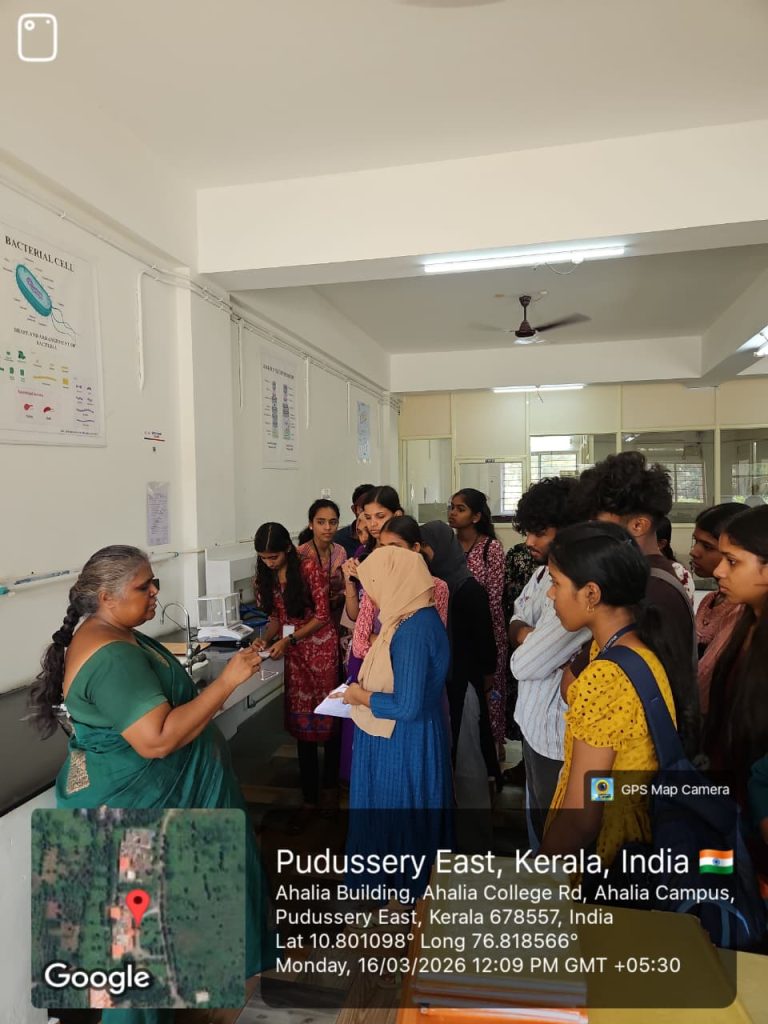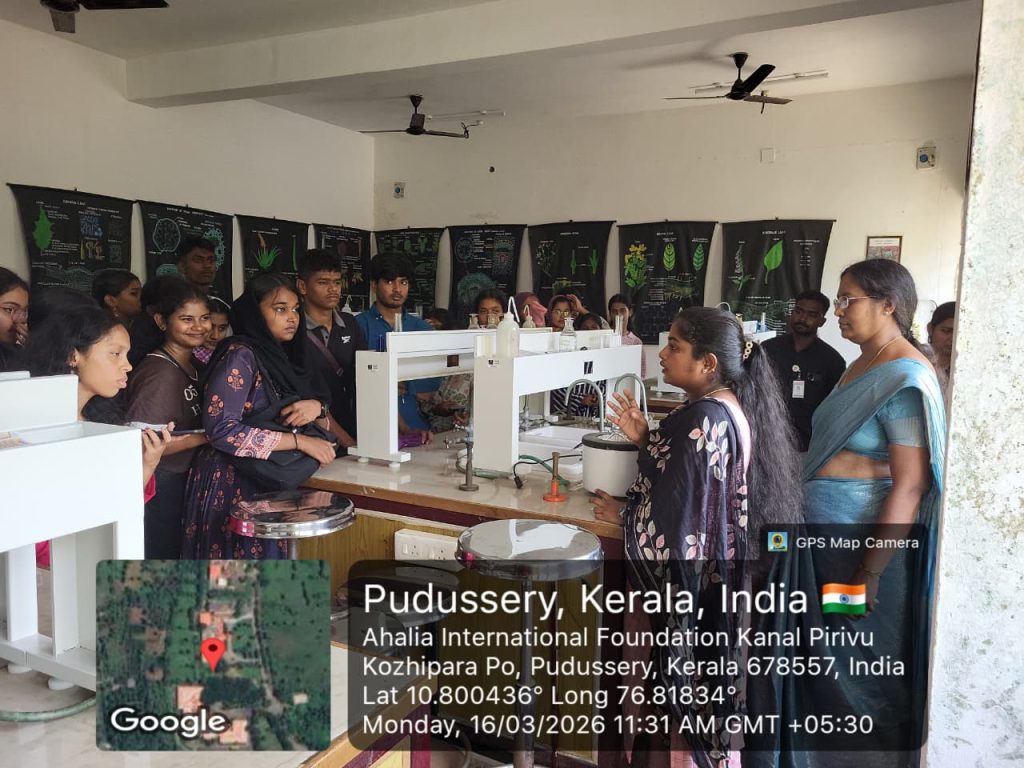

The Government College, Chittur organized an educational visit for students to Ahalia School of Pharmacy. The
primary objective of this visit was to provide practical exposure to various departments and facilities essential in
pharmaceutical education and industry. The session included demonstrations and explanations of instruments,
processes, and techniques used across different pharmaceutical disciplines, highlighting their applications in
research, formulation, and quality control.
Departments and Facilities Visited
- Pharmacognosy Department
Focus: Study of medicinal plants and natural products.
Learning Outcomes:
o Identification of crude drugs and plant specimens.
o Understanding extraction and processing of herbal materials.
o Awareness of the role of natural sources in drug development.
Student Observation (Botany Link):
o Students related their botany knowledge by identifying plant morphology such as roots, stems,
leaves, and flowers.
o Observed differences between various medicinal plant specimens. - Pharmaceutical Microbiology Department
Focus: Study of microorganisms relevant to pharmaceuticals, including their identification, cultivation, and
control.
Learning Outcomes:
o Understanding sterilization techniques and aseptic handling.
o Identification and cultivation of microorganisms.
o Knowledge of antimicrobial testing and contamination control.
o Awareness of microbiological quality control in pharmaceuticals. - Pharmacology Department
Focus: Study of drug action and effects on biological systems.
Learning Outcomes:
o Understanding mechanisms of drug action.
o Exposure to experimental pharmacology setups.
o Awareness of drug safety, dosage, and therapeutic applications. - Pharmaceutical Chemistry Department
Focus: Study of chemical properties, structure, and synthesis of drugs.
Learning Outcomes:
o Understanding drug composition and chemical behavior.
o Exposure to analytical techniques and qualitative tests. - Pharmaceutics Department
Focus: Formulation and development of pharmaceutical dosage forms.
Learning Outcomes:
o Basics of tablet, capsule, and liquid formulation.
o Understanding excipients and their roles.
o Exposure to formulation techniques and equipment. - Machine Room
Focus: Industrial-scale pharmaceutical equipment.
Learning Outcomes:
o Demonstration of machines used in drug manufacturing.
o Understanding production processes such as mixing, granulation and compression.
o Insight into large-scale pharmaceutical production. - Instrumentation Room
Focus: Analytical and quality control instruments.
Learning Outcomes:
o Introduction to advanced instruments used in drug analysis.
o Understanding quality testing and validation procedures.
o Awareness of the importance of precision and accuracy in pharmaceutical analysis. - Student Participation and Learning
- Active Engagement: Students actively observed demonstrations and interacted with faculty members
- across departments.
- Practical Exposure: The visit helped students connect theoretical knowledge with real-world applications.
- Skill Development: Students gained insights into laboratory techniques, equipment handling, and
- pharmaceutical processes.
- Awareness: The visit broadened understanding of multidisciplinary roles in the pharmaceutical field.
- Motivation: The experience inspired students to explore careers in research, industry and higher education.
- Conclusion
- The visit offered a dynamic blend of theory and practice, giving students a clear, real-world perspective of
- pharmaceutical sciences. Exposure to diverse departments and modern laboratory facilities not only strengthened
- their academic understanding but also sparked curiosity and professional interest, making the experience both
- impactful and inspiring.Notably, feedback collected revealed that 88% of the students rated the visit as
- satisfactory, reflecting the overall success and impact of the program.